
HANTAVIRUS and HONDIUS: Synchronicity, Symbolism, and the Strange Linguistic Echo by Kevin Wikse
 |
| Research notes by Kevin Wikse examining linguistic resonance, symbolic mirroring, and synchronicity between HANTAVIRUS, HONDIUS, and the recurring archetype of the hunter. |
Linguistic Mirroring and Symbolic Resonance
Today, I found myself incessantly thinking about the odd way the words HANTAVIRUS and HONDIUS, in a slightly skewed fashion, mirror one another. Coincidence? No. Even if the pairing of the two words was not consciously planned, universal synchronicity would still find a way to insert itself.
I began breaking the two words down to their logical roots.
The Hondius Cruise Ship and the Hantavirus Narrative
If you do not know, Hondius is the cruise ship on which we are told the Hantavirus began its spread.
That alone was enough to catch my attention.
But then the symbolic threads began tangling themselves together in increasingly strange ways.
Why Certain Words Seem Designed to Echo
HONDIUS is the Latinized form of the Dutch surname Hondt or Hondt, meaning “dog,” often implying a connection to hunting or a hunter.
Meanwhile, HANTA is the Japanese transliteration of the English word “hunter.” It refers generally to someone who hunts, but also specifically to traditional, highly regulated, and community-based hunting practices in Japan.
Hunter.
Hunter.
Hunter.
Words begin circling the same symbolic drain.
Posting from Hunter Biden’s Laptop…
(wait… HUNTER Biden’s Laptop? Weird.)
And yes, if you know my alter ego, my tagline “Dog Will Hunt” was not lost on me either.
Synchronicity as Psychological or Metaphysical Mechanism
Some will call this coincidence. Others will dismiss it as apophenia, the human tendency to detect patterns where none exist.
Fair enough.
But synchronicity has always occupied a strange territory between psychology, symbolism, and whatever hidden architecture may sit beneath reality itself.
Sometimes patterns emerge naturally from language and culture. Other times, they arrive with such theatrical timing and layered symbolic overlap that they almost feel placed there intentionally—as if reality itself enjoys leaving fingerprints on the glass.
Pattern Recognition in an Age of Manufactured Reality
We live in an era saturated with narratives, symbols, engineered messaging, psychological conditioning, branding, and memetic warfare.
In such an environment, pattern recognition becomes both a survival mechanism and a dangerous temptation.
The challenge is not merely seeing patterns.
The challenge is learning which patterns deserve closer examination.
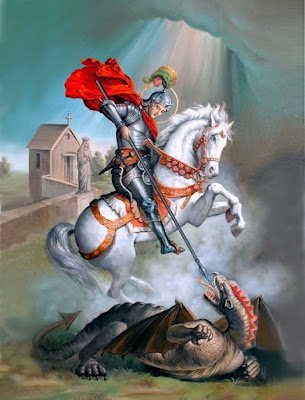
I have made an image that is shareable and downloadable for whatever purpose it may—or may not—serve.
—Kevin Wikse, Gen-X “tough as coffin nails” Journalist, Researcher, Remote Viewer, and Harsh Societal Critic.


Comments
Post a Comment